The First Morningstar Science Fiction Developer Conference: From Imagination to Reality, From Science Fiction to Science
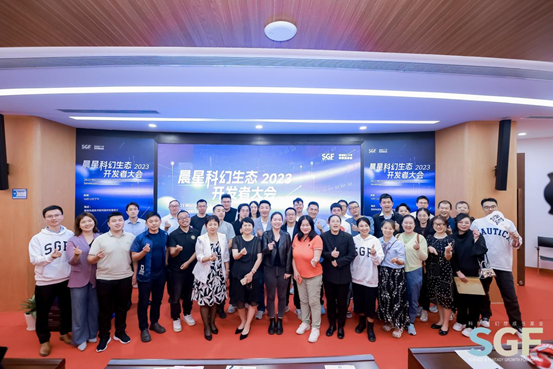
On October 12, 2023, the 2023 Morningstar Science Fiction Ecosystem Developer Conference (hereinafter referred to as "Science Fiction Developer Conference"), the first domestic science fiction ecosystem brand event jointly initiated by the SCIENCE & FANTASY GROWTH FOUNDATION (hereinafter referred to as "Science Fiction Fund") and the Shenzhen University of Technology Education Foundation (hereinafter referred to as "Shenzhen University of Technology Foundation"), was successfully held at the Shenzhen Institute of Advanced Technology, Chinese Academy of Sciences. Over a hundred scientists, engineers, science fiction writers, film and television special effects institutions, venture capital institutions, AI innovation enterprises, and related developers attended the conference, including Bi Yalai, Director of the Institute-Enterprise Cooperation and Innovation Development Department of the Shenzhen Institute of Advanced Technology, Chinese Academy of Sciences, and Secretary-General of the Shenzhen Robot Association, Ma Guobin, Chairman of the SCIENCE & FANTASY GROWTH FOUNDATION, Liu Kuan from the Shenzhen University of Technology Education Foundation, Tan Gang, a young science fiction writer, and Guo Jianwu, Founder of Star Vision Capital. The conference was presided over by Mr. Xiao Zhengyu, Legal Advisor of the Science Fiction Fund.
The Science Fiction Developer Conference is the first interdisciplinary and cross-field multi-brand event in China centered around the "science fiction ecosystem". Each year, it sets a cutting-edge theme of scientific innovation, aiming to build a full-chain industrial ecosystem interaction platform encompassing source innovation, content creation, technology application, and the integration of innovative industries. It promotes cross-sector integration within the science fiction ecosystem, effectively releases resources, benefits all stakeholders, and empowers the entire ecosystem with social innovation. This year's conference, themed "AI Emergence: Opportunities and Challenges", consists of a series of exciting events, including "1 keynote speech on the significance of the Science Fiction Developer Conference, 1 interpretation of the theoretical system of science fiction ecosystem developers, 2 content releases for inclusive developers (the action plan for open licensing of science fiction original copyrights and the initiative for computing power donation), 2 keynote speeches, and 1 roundtable forum".
In his speech, Ma Guobin, the chairman of the Science Fiction Foundation, believed that science fiction embodies unparalleled innovation potential. By creating and researching revolutionary concepts that "sound like science fiction," science fiction can turn scientific fantasy into scientific reality. This conference calls for China's imagination towards the future to jointly build and improve the ecological environment.
Mr. Bi Yalei, Director of the Institute-Enterprise Cooperation and Innovation Development Office of the Shenzhen Institutes of Advanced Technology, Chinese Academy of Sciences, and Secretary-General of the Shenzhen Robot Association, affirmed the interactive relationship between science fiction and technology in his speech, and stated that science fiction ecosystem developers are a new model for promoting cutting-edge innovation, providing a new practical approach for the integration of science fiction, science, technology, and science popularization.
Mr. Ma Yuepeng, the initiator and director of the Science Fiction Fund, interpreted the theoretical system of the Science Fiction Ecosystem Developer Conference. He stated that the convening of the Science Fiction Ecosystem Developer Conference was based on a methodology developed by the Science Fiction Fund after years of supporting the development of the science fiction industry. This methodology incorporates research and development experience from both domestic and international science fiction industries, elucidates the innovative development relationship between science fiction, technology, and society, and proposes a set of solutions. He hoped that developers engaged in science fiction, including institutions, teams, and individuals, could fully participate in the ecological development of the science fiction industry, thereby promoting its prosperity and driving technological and social innovation. Subsequently, he announced the highlight of the conference—the Science Fiction Fund's Copyright Open Licensing Action Plan. In accordance with the requirements of the China National Intellectual Property Administration's patent open licensing pilot program, the Science Fiction Fund, as one of the institutions holding the most original copyrights of the new generation of science fiction, dared to be the first to try. For the first time, it opened 19 original copyrights covering various themes such as science fiction literature, film and television, screenplays, and games to the science fiction ecosystem, encouraging like-minded individuals to submit applications directly to the Science Fiction Fund or join the action plan with their own original copyrights.
Mr. Liu Kuan from the Education Foundation of Shenzhen University of Technology stated that science fiction literature, movies, and other creations can inspire innovative thinking among scientists and engineers, predict future technological development, promote frontier scientific exploration, and encourage venturing into uncharted territories. The Shenzhen University of Technology, which is currently under construction in Guangming Science City, is such an innovative university that naturally aligns with science fiction, aiming at future technology and industries. Students can be exposed to new knowledge and technologies in fields such as brain-computer interfaces, large language models, deep space and deep sea exploration, and AI chips at the earliest opportunity, experiencing the charm and challenges from the frontier of science fiction to the frontier of science. In addition, to address the pain points of computational power demand in science fiction development and scientific research, the Education Foundation of Shenzhen University of Technology has initiated a computational power donation plan, established a computational power donation fund, and created a platform for computational power donation and utilization. It advocates for relevant institutions to donate surplus computational power to developers and scientific researchers under rules and supervision, thereby supporting China's innovative education, scientific research, and creative talent cultivation.
It is understood that this is the first public welfare fund in China's science fiction and scientific research ecosystem, initiated around the source of innovation and computing power support. It represents a new paradigm for promoting resource integration and empowering ecosystem participants among large, medium, and small enterprises in the AI era. The event received enthusiastic responses from developers, and these two aspects may become incubation platforms for promoting concept verification and creative realization.
Then, Dr. Deng Chunshan, a senior engineer from the Shenzhen Institutes of Advanced Technology, Chinese Academy of Sciences, and the Shenzhen-Hong Kong Brain Science Innovation Institute, delivered a speech titled "Brain-Computer Interface: From Science Fiction to Reality". He shared the inspiration of brain-computer integration imagination from science fiction scenarios for real-world brain-computer interface technology, as well as the development of brain-computer interfaces, providing innovative inspiration for the developers present.
Dr. Zhou Peng, CTO of Ruoxin Technology Co., Ltd. in Shenzhen, presented on the theme of "Industrial Revolution and Cognitive Revolution, Brain-Inspired Computing and Intelligence Emergence". She shared the convenience and vast application prospects brought by GPT and artificial intelligence to human life, predicting that they may mark the fourth industrial revolution in human history, but also pointing out that excessive computing power consumption is a bottleneck in their development. The brain-inspired large language model NLN developed by her team significantly reduces computing power consumption due to the adoption of brain-inspired algorithms. This model resembles a transformer during training and an RNN during inference, combining the advantages of both neural networks. Furthermore, she discussed how language was a key factor in the cognitive revolution of Homo sapiens 70,000 years ago, and how large language models may now trigger a cognitive revolution in machines, which will not only spark a new industrial revolution but also provide a powerful impetus for human cognitive progress.
After the keynote speech, Secretary-General Chen Muqing of the Science Fiction Foundation invited young science fiction writer Tan Gang, physical special effects master Liang Chaopo, representatives from innovative enterprises with large language models - General Manager Wang Bolun of Ruoxin Technology, founder of Star Vision Capital Guo Jianwu, and Dr. Deng Chunshan, a senior engineer from the Shenzhen Institute of Advanced Technology, Chinese Academy of Sciences, to participate in a roundtable forum on "Emerging Opportunities and Challenges of AI", jointly discussing the impact of AI emergence on creation, research, and work.
The developer conference this time was filled with exciting and cutting-edge content, showcasing the collision and fusion of science fiction and reality, and sparking more people's enthusiasm and interest in science fiction and technology. The event received widespread praise and attention, and came to a successful conclusion amidst the lingering discussions among the developers.