The 81st World Science Fiction Convention was successfully held in Chengdu, with the sci-fi morning star making its debut at the World Science Fiction Convention
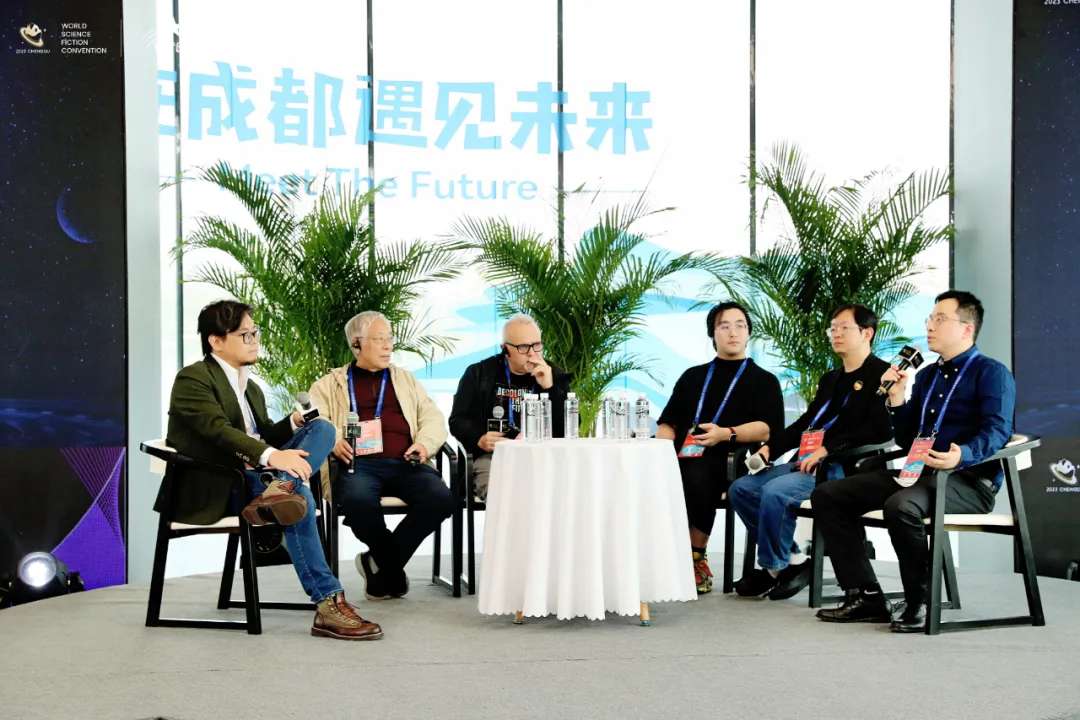
On the afternoon of October 21st, at the Earth Hall of the Chengdu World Science Fiction Convention, a themed forum titled "Sci-Fi Newcomers · Insights into the Future" attracted the attention of numerous science fiction fans. The forum was chaired by Zhang Ran, a renowned science fiction writer and the initiator and director of the SCIENCE & FANTASY GROWTH FOUNDATION (hereinafter referred to as "Sci-Fi Fund"). It invited Wang Jinkang, a leading Chinese science fiction writer and literary supervisor of the Sci-Fi Fund, Francesco Verso, a famous Italian science fiction writer, publisher, and founder of Future Fiction, San Feng, a director and chief researcher of the Sci-Fi Fund and chairman of the Morningstar Cup Science Fiction Literary Competition, as well as new science fiction writers Tan Gang and Fractal Orange, to share their experiences in science fiction literary creation, as well as their insights and visions for the future.
The focus of this forum is on exploring the systematic cultivation model of the Morningstar Cup China Original Science Fiction Literature Competition for the domestic new generation of science fiction writers. In 2015, with the strong support of the Shenzhen Nanshan Science and Technology Association, the Morningstar Cup initiated an innovative exploration in the field of science fiction in Shenzhen Nanshan. It pioneered a public welfare solicitation model based in Shenzhen and targeting the whole country, always taking the exploration, cultivation, and support of science fiction creative talents as its original intention. It has been successfully held for 8 consecutive years, discovering more than 70 new science fiction authors and publishing 23 science fiction works. Among them, science fiction novels such as "Three Moons" have recently been published by Shenzhen Publishing House as part of the "China Science Fiction Rising Stars" series, receiving great acclaim in the science fiction community. Past award-winning works such as "Solid Ocean" and many others have also been translated and published overseas, greatly enhancing the international influence of Chinese science fiction. Among global readers, the most widely read Chinese literary work is the science fiction novel "The Three-Body Problem". In China, "The Three-Body Problem" has also consistently ranked as the top-selling literary book. Through the "Morningstar Cup" competition, the Science Fiction Fund continues to discover new and emerging science fiction writers, flourish the science fiction cultural market, and consolidate the science fiction industry, using science fiction imagination as the source of technological innovation and providing continuous innovation drive.
Zhang Ran stated that the purpose of the Morningstar Cup is to provide a platform for original Chinese science fiction literature, enabling more young people with ideas and talent to express their imagination and exploration of the future through words. He also invited two writers who had previously won the Morningstar Award, Tan Gang and Fractal Orange, to share their growth stories from participating in the competition to publication, encouraging the science fiction enthusiasts present to promptly turn their imaginative content into written submissions.
Italian guest Francesco Verso expressed high praise and attention for the Morningstar Cup, especially for the creation and growth of new-generation writers. He believed that the Morningstar Cup is a very valuable and meaningful project, which not only cultivates and supports original science fiction writers in China, but also promotes international exchanges and cooperation. He also introduced his own project, Future Fiction, which is a platform dedicated to discovering and promoting the most innovative and diverse science fiction literary works worldwide. He hopes to establish a closer partnership with the "Morningstar Cup" to bring more Chinese works to the world.
Wang Jinkang, the leading figure in Chinese science fiction, serves as the literary supervisor for the "Morningstar Cup" competition. Since its inception, the "Jinkang Award" has been a core prize, encouraging young science fiction writers to focus on creating hardcore science fiction. The finalist entries will be reviewed by Wang Jinkang himself, attracting a large number of science fiction creators to pay attention and submit their works. He provided guidance and suggestions on creation for science fiction enthusiasts on site based on his years of creative experience. He stated that science fiction literature is a literary form that contemplates and predicts the future. It requires authors to possess extensive knowledge, keen observation, imagination, and logical thinking abilities. He advised young science fiction writers to read more, observe more, and think more, not to be limited by their own life experiences. Instead, they should broaden their horizons, pay attention to the development and changes in various fields such as society, technology, and culture, and seek inspiration and creativity from them. He also encouraged science fiction writers to dare to innovate, not to be constrained by existing patterns and routines, but to try to break through their comfort zones and explore more possibilities and potential.
San Feng, a science fiction critic and chief researcher of the Science Fiction Foundation, shared his insights and perspectives on the future of science fiction cities and science fiction creation. He said that science fiction literature is an imagination and shaping of future cities, which can reflect people's expectations and concerns about urban life, and also provide some inspiration and reference for urban planning and construction. He believes that the future development direction of science fiction literature is more diversified, cross-disciplinary, and internationalized. It will integrate and influence with other cultural and industrial forms, forming a more abundant and vibrant science fiction ecosystem. He also stated that as a professional science fiction organization, the Science Fiction Foundation will continue to be committed to promoting the development and innovation of Chinese science fiction literature, providing more support and services for science fiction writers, offering more competitions and activities for science fiction enthusiasts, and providing more practices and explorations for the science fiction industry.
The forum was filled with a lively atmosphere of exchange. Science fiction fans present shared their views and questions about science fiction literary creation and the future. Additionally, overseas science fiction fans and representatives from the science fiction industry also participated in the event.
The thematic discussions at this forum showcased the strength of Shenzhen's science fiction community to the world's science fiction fans, marking Shenzhen's ascendance on the global stage. These achievements are attributed to Shenzhen's pioneering spirit of reform and to science fiction organizations like the Science Fiction Foundation, which have been continuously nurturing and cultivating the writer community, fostering a science fiction cultural atmosphere in the city, and actively engaging in practical exploration within the science fiction industry chain. It is worth mentioning that many science fiction practitioners, industry representatives, university students, and science fiction fans from the Greater Bay Area expressed that their greatest gain from attending the World Science Fiction Convention was meeting the Science Fiction Foundation. They expressed their hope to participate in the "Morningstar Cup" competitions and events in the future, and to jointly tell Chinese science fiction stories to the world.