Observation of Science Fiction Industry | Secret Invasion, Will AI Subvert the Pattern of Film and Television Creation?
On June 21st of this year, Marvel's "The Secret Invasion" premiered, and its AI generated opening caused a huge controversy. Director and producer Ali Selim stated that the opening was commissioned by New York film production company Method Studios to use AI for creation, which was a decision that "matched the atmosphere of the film". "The use of generative AI in" The Secret Invasion "created a relatively complex situation for visual effects and animation workers, and Marvel opened the door for AI, perhaps closing a window for many professionals in film and television special effects, animation, and design.
Because Marvel has a huge impact on the overall film and entertainment industry, this decision, especially those related to post production work models and technological applications, is easily interpreted and imitated by the industry. The use of artificial intelligence in "Secret Invasion" is a sign of a series of upcoming AI invasions. With the continuous development of artificial intelligence technology, more realistic and visually stunning special effects will be seen in future MCU movies and TV programs.
Concerns about AI intrusion during Hollywood strike
Recently, there has been a major strike in Hollywood, following the breakdown of negotiations between the Writers Guild of America (WGA) and film and television producers regarding salary increases. Hollywood film and television screenwriters began a large-scale strike in early May. Subsequently, due to the failure to reach an agreement on a new contract with the Alliance of Motion Picture and Television Producers (AMPTP), SAG-AFTRA, one of the three major Hollywood unions with approximately 160000 members, launched a strike in mid July.
The Screenwriters Association hopes that Hollywood can improve the treatment of screenwriters and standardize the use of AI; The Actors Association is concerned that breakthrough technologies in the future will allow AI to replace actors in acting. The strike of screenwriters and actors will have a "destructive" impact on the entire film and entertainment industry.
Both strikes are related to the development of AI, which is rapidly invading every aspect of the entire film production process from text script generation, concept image generation, to image generation. There is no trend of slowing down.
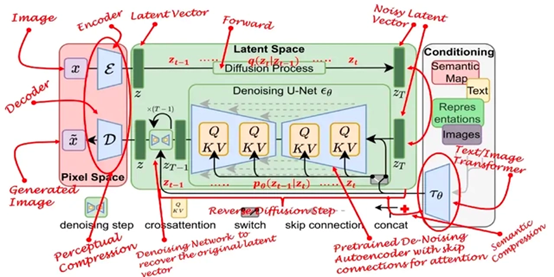
The working principle of Artificial Intelligence Generated Content (AIGC)
Let's first understand the working principle of artificial intelligence in generating content. AI mainly trains models through machine learning algorithms, learning patterns and patterns from large amounts of data. Then, when given some input, it can generate new content based on the learned knowledge. However, AI is not capable of truly independent creation, and the content it generates is still based on materials learned in the past. Therefore, people are concerned that the content generated by AI may have similarities or even duplicates with the labor results of others, leading to copyright disputes and moral controversies.
The application of AIGC in the entertainment industry also has certain advantages and potential, as it can help screenwriters provide creativity and ideas, saving time and energy. During the production process, it can also analyze and optimize the script, providing better creative suggestions. This collaborative model can fully utilize the intelligence and computing power of AI, as well as assist screenwriters, achieving a win-win situation.
Application Cases of AIGC in Hollywood
At present, we can collect some cases of the six major Hollywood film and television production companies using AI:
Disney
-The Lion King (2019) - Realistic CG animal character animation using AI (facial expressions, fur, muscles)
-Frozen 2 (2019) - Using AI Programs to Generate Unique Snowflake Designs
-The Mandalorian (2019) - Using AI and Machine Learning to Implement a Virtual Production Environment
Warner Bros.
-Batman (2022) - Using AI for visual effects (smoke, fire, explosion) and post production
-Fantastic Beasts 3 (2022) - Conceptual Art Design Using AI Supported NVIDIA Canvas Digital Art Tool
sony pictures
-Spider Man: Homeless Day (2021) - Using AI anti-aging visual effects to process elderly characters
-UNCHARTED (2022) - Application of AI supported virtual production technology
Netflix
-Love, Death, and Robots (2019) - Using Machine Learning Algorithms to Achieve Rendering Efficiency in Animated Short Films
-Stranger Things (2016) - Using AI for anti-aging and facial replacement effects on characters
Amazon Productions
-The Lord of the Rings: The Power Ring (2022) - Using AI for World Modeling and Virtual Creation
-Reincarnation Time (2021) - Using machine learning based upscaling technology to convert 2K materials to 4K
Marvel Studios
-Avengers: Endgame (2019) - Using Deep Learning Facial Replacement for Aging Actors
-Loki (2021-) - Virtual production using Unreal Engine game engine with AI support
At present, multiple Hollywood film companies are widely using AI technology in the fields of visual effects, animation, virtual production, post-processing, sound effects, conceptual design, etc., to improve the production efficiency and creativity of movies and TV dramas. This has led to the continuous improvement of AI capabilities every year, including its ability to create digital humans, virtual production, and deep video processing.
Artificial intelligence is changing the way movies are made. It can be used to create more realistic and expressive digital humans, as well as for live action and animated movies, and for creating virtual productions for visualization and final production.
Application Analysis of AICG in Media and Entertainment Fields
In recent years, artificial intelligence (AI) has become an increasingly important component of the media and entertainment industry. From Hollywood studios to video game developers, companies are utilizing artificial intelligence technologies such as machine learning and neural networks to enhance and automate some creative processes.
One of the most prominent artificial intelligence applications in the entertainment industry is computer-generated imagery (CGI) and visual effects. For example, the Disney live action remake of "The Lion King" (2019) utilized deep learning algorithms to realistically animate animal characters such as Simba, Peng Peng, and Scar. The AI system Pride simulates complex muscle, skin, and fur dynamics to bring characters to life. In the TV series' The Mandalorian ', Nvidia's GauGAN AI meticulously drew detailed backgrounds and visions for the Star Wars universe. Machine learning algorithms can quickly process large datasets of images, videos, and 3D models to train systems that can generate realistic environments, materials, and characters according to programs. Compared to pure manual techniques, this can save a lot of time and reduce costs.
In addition to visual effects, artificial intelligence is also applied in fields such as color grading, sound design, and editing. For example, Environmental Intelligence provided AI driven sound design for the 2020 movie Tesla. Their algorithm processes each scene before suggesting background atmosphere and sound effects. Although artists still fine tune the audio, artificial intelligence assistance can provide high-quality sound more effectively.
Similarly, the 2019 documentary "Apollo 11" utilized machine learning techniques to restore and remake archival footage of the moon landing, and enhanced image and audio quality. The generation capability of artificial intelligence has also given rise to new forms of media content. Models such as DALL-E 2, GPT-3, and Aiva can automatically synthesize novel images, text, and music based on prompts. In 2019, the Chinese TV drama "Scissors Seven" used machine learning to generate original music based on the director's input, while Generative Adversarial Networks (GANs) can generate new videos that are close to the desired style.
This year, Tencent used its AI "Ultra HD Immersion Restoration Engine" to restore Leslie Cheung's concert 22 years ago, turning the video into "ultra high definition". It utilized various artificial intelligence restoration algorithms to fix common issues such as vertical lines, snowflakes, noise, compression distortion, and jitter in old films. Especially based on self-developed face restoration models, image restoration is transferred to the video process and inter frame stability processing is added to solve the stability of face detection, optimize multi angle face effects, and solve the complex scene problems encountered by dynamic faces in videos.
In June of this year, the Science Fiction Foundation (SGF) and Shenzhen Publishing House also used AIGC to assist in the design of some book covers in the "China Science Fiction Emerging Series" series. All of these indicate that in the future, artificial intelligence will greatly automate and enhance the human creative process - perhaps one day, an entire movie, video game, or song can be created with minimal human input.
In video games such as' Unmanned Deep Space ', algorithms generate new worlds, creatures, and narratives suitable for each player. On streaming platforms like Netflix, artificial intelligence can allow branching and selecting your own adventure storylines. Sensoryx's Feelreal mask aims to create an immersive multi sensory movie experience by releasing the scent and effects of screen action prompts. As artificial intelligence entertainment becomes more non-linear and responsive, new creative opportunities will emerge.
Conclusion
Huanxiaoji believes that for film production practitioners, the benefits of using artificial intelligence are obvious, the improvement in efficiency is beyond doubt, it can also reduce costs, and even identify and correct errors in materials. However, from the current popularity of artificial intelligence in China, there are still many challenges. Firstly, practitioners generally lack professional AI knowledge, especially the ability to effectively use artificial intelligence. In addition, the implementation cost of artificial intelligence may be high, and the initial investment in building digital assets is higher than that of traditional production. Once the digital assets are finalized in the early stage, the cost of overturning and starting over may be high, which can lead to project failure. Another hidden concern is that artificial intelligence is being used to create deep fakes, which can be used to spread misinformation and propaganda, causing negative impacts on society.
From a sociological perspective, interactive artificial intelligence content poses risks in terms of data privacy and transparency. Personalization driven by artificial intelligence may result in users only encountering media content that meets their existing tastes, thereby amplifying biases. At the same time, algorithms trained on human generated datasets inherit social biases, which may lead to film art deviating from mainstream societal expectations.
For a city or region, in the current explosive development of AI, it is possible to attract AI R&D talents and build matching software and hardware infrastructure within the framework of the dominant industry in the city or region, and even focus on the development of AI technology in a specific sub field, which can become the technological core of future urban development in time.
The arrival of a new revolutionary technology is bound to cause anxiety, and this time is no exception, but at the same time, it will also create new job opportunities that match it. In the medium to long term, the traditional production mode and AI production mode will coexist for a considerable period of time, but film and television practitioners must embrace and understand the changes brought by AIGC with a positive attitude in order to provide users with more and better film and television content that meets market needs faster.