Hugo Awards changed: When fantasy beats science fiction, women rewrite rules
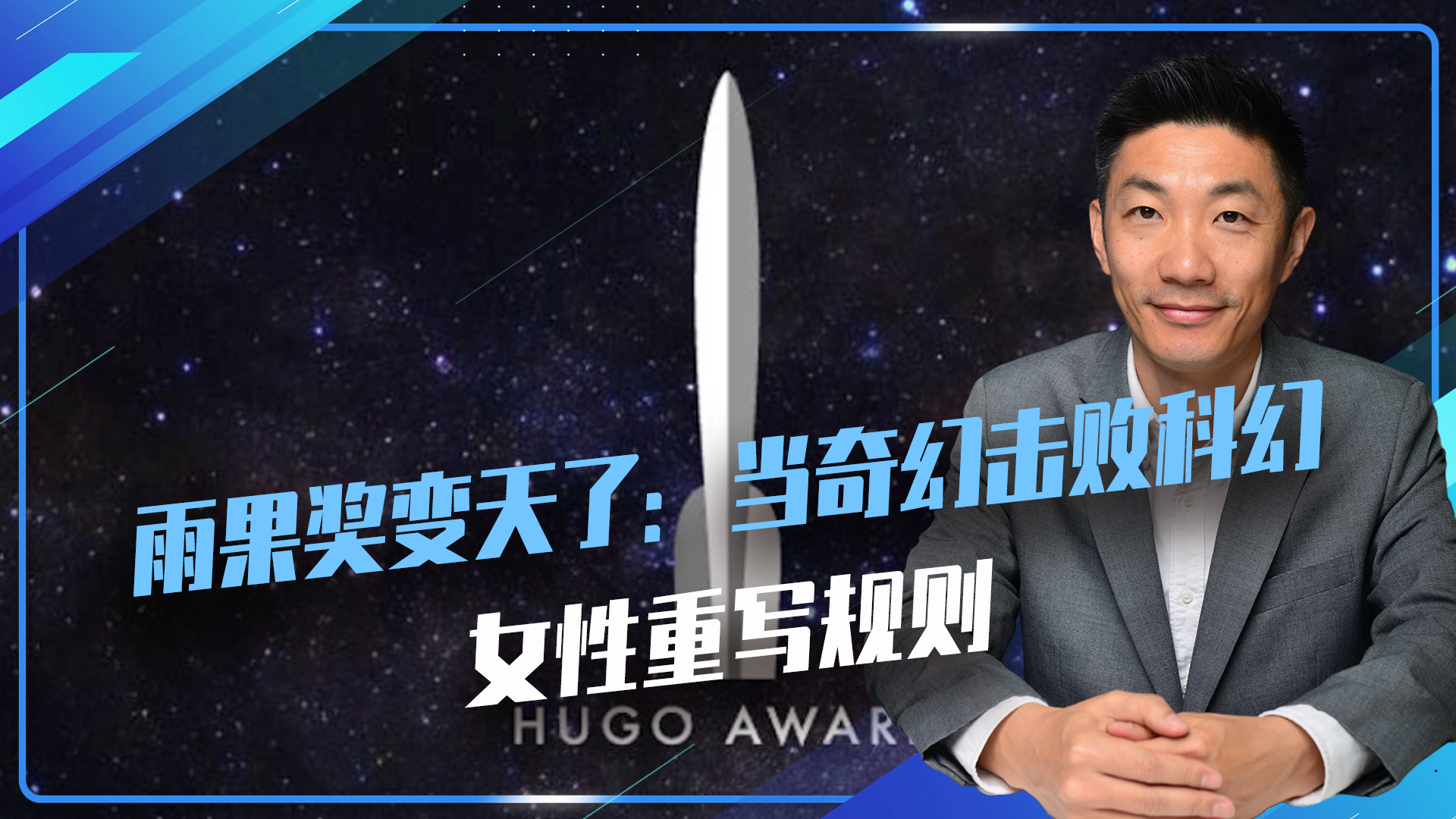
A few days ago, the nominations for the 2026 Hugo Awards were announced, and the six nominees for Best Long Form were "A Drop of Corruption," "Death of the Author," "The Everlasting," "The Raven Scholar," and "The INCANDESCENT." Just by looking at these titles, it's hard to tell whether this is science fiction or fantasy. In fact, these five works are not considered science fiction in the traditional sense, but more inclined towards fantasy. In addition, Adrian Tchaikovsky's "The Shroud" is a combination of science fiction and horror novels. What does this mean? Fantasy overwhelms science fiction, the collapse of genre boundaries. Once science fiction and fantasy were at odds, with science fiction pursuing technological logic and fantasy embracing magic and mythology. But today, this boundary is melting. Readers no longer ask 'Is this science?' but 'Is this story moving?'? Female writers are particularly adept at intertwining stories with personal emotions, constructing a 'third space' that is neither purely science fiction nor traditional fantasy. We can say that this is the decline of science fiction, or we can say that this is the evolution of genre literature. Let's take a look at another set of numbers: among the nominated writers in the main categories (long, medium, short) of this year's Hugo Awards, women account for 73%, while men only account for 22%. This means that only one out of every four nominated writers is male, and works from a male perspective have undoubtedly withdrawn. Ten years ago, this was unimaginable. The 2015 'Sad Puppies' incident is still fresh in our memory - the movement that attempted to pull the Hugo Awards back onto the traditional white male sci-fi track. Looking back today, that movement actually became a catalyst: it stimulated the entire community and pushed for a historic reversal of gender ratios. But more importantly, the transfer of narrative discourse power. The core theme of these works has changed from 'how humans conquer the universe' to 'how humans understand themselves', with relational narratives replacing conquest narratives. In terms of the nationality distribution of writers, the United States dominates with an absolute advantage of 64%. The UK, Australia, and Canada together account for 30%, which poses a huge irony to "multiculturalism": themes can be decentralized from the West, but creators are still confined to the American English system. On the other hand, this year's Aurora Science Fiction Awards in Canada nominated writers of Chinese, Indian, and Mexican descent, and submissions can be in any language. If we break down the genes of this year's shortlisted works, we will find four high-frequency words: fantasy, adventure, suspense, and time travel. The Raven Scholar "tells the story of seven outstanding warriors, thinkers, and strategists vying for the throne." The Radiant Light "is set in a noble boarding magic academy, where the female protagonist finds herself by resisting demons. These two stories belong to the academic fantasy genre." One Drop of Corruption "tells the detective suspense story triggered by a financial official disappearing without a trace in an imperial border town. Eternity is an adventure story that breaks through genre boundaries, where a timid historian is sent back in time to ensure she fulfills her duties. The Death of the Author "is a work of" books within books "that blurs the boundary between writing and being written, telling the story of a marginalized woman who is willing to take risks in order to make her voice heard. These stories share the same theme: how the past shapes the present, how individuals confront structures, and it feels like the American science fiction and fantasy community has completed a paradigm shift from 'tolerance' to 'normalcy'. From a business perspective, there are two trends worth paying attention to. One is the flow of insiders in the publishing industry towards the creative end, where those who understand the market begin to write stories; The second is that digital natives refer to the impact of authors from online journals on the traditional publishing system, and "online first, offline later" has become the standard path. This not only changes the way works are disseminated, but also changes the evaluation criteria - community reputation is more important than editor recommendations. As a science fiction fan, one cannot help but ask what the Hugo Awards are becoming? Looking back at the 1960s, the Hugo Award represented the courage of humanity to explore the unknown of outer space. Today, it represents the courage to explore the unknown within. The Hugo Award is no longer the award dominated by engineers, scientists, and technological optimists. It is also a mirror that reflects the anxiety, longing, and identity questioning of our era. This may not necessarily be a bad thing. Science fiction has never promised to be 'hard', its mission is to expand the boundaries of human imagination. Outer space and the depths of the heart are both boundaries that humans need to explore.